

You have always needed to know how it works
You took things apart to understand them, and put them back together better than you found them. You would rather fix it right than be told it is fixed. You love airplanes, you love the work, and you have never needed much credit for doing it well.
Every airplane here is a different problem
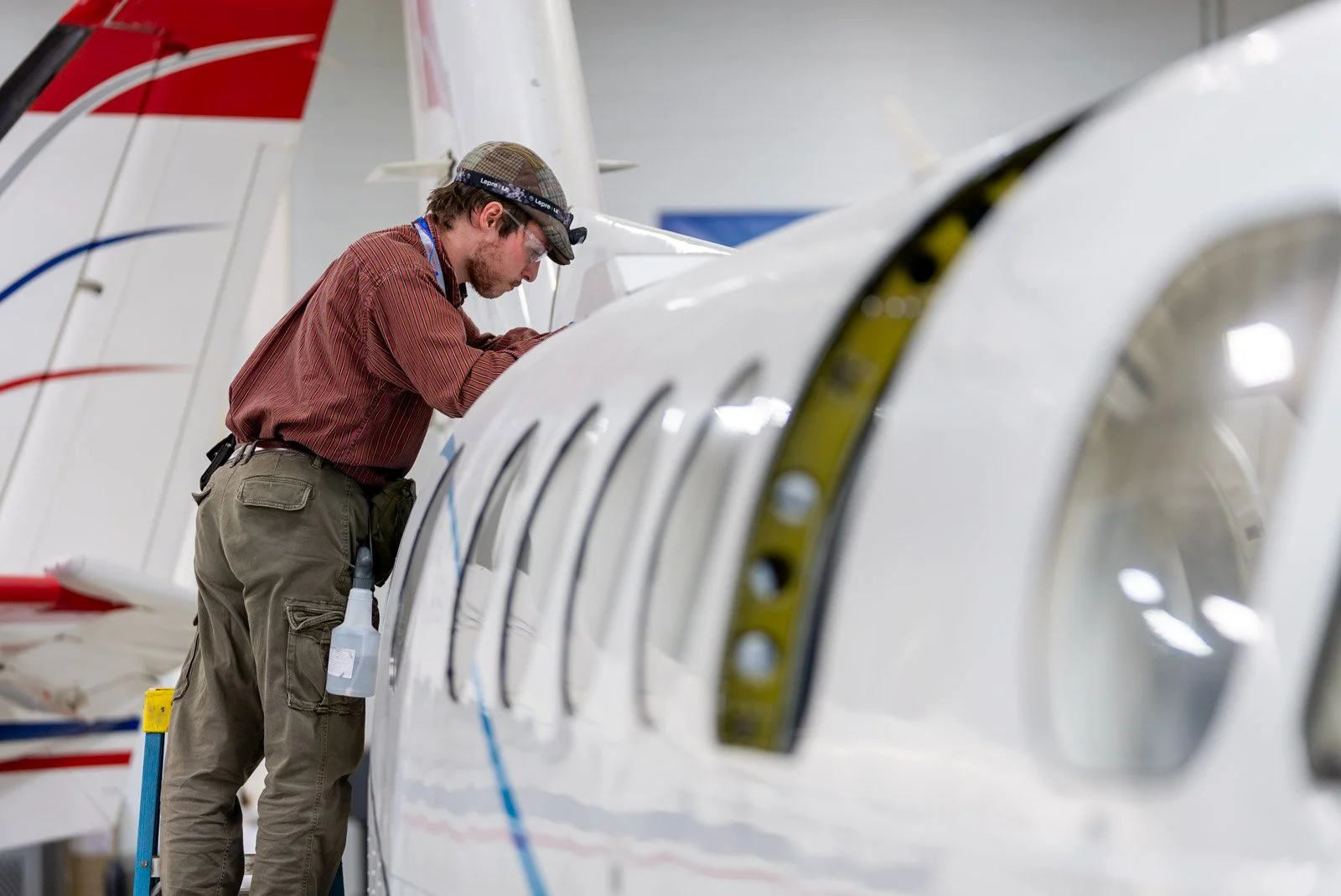
This is not a manufacturing line. On a line, every day is the same motion repeated. Here, every airplane is different, and every program carries its own problems to solve. This is a job shop in the truest sense — the place complex, mission-modified aircraft come to be overhauled, modified, integrated, and made ready. The variety is not a complication to be managed. For the right person, it is the whole appeal.
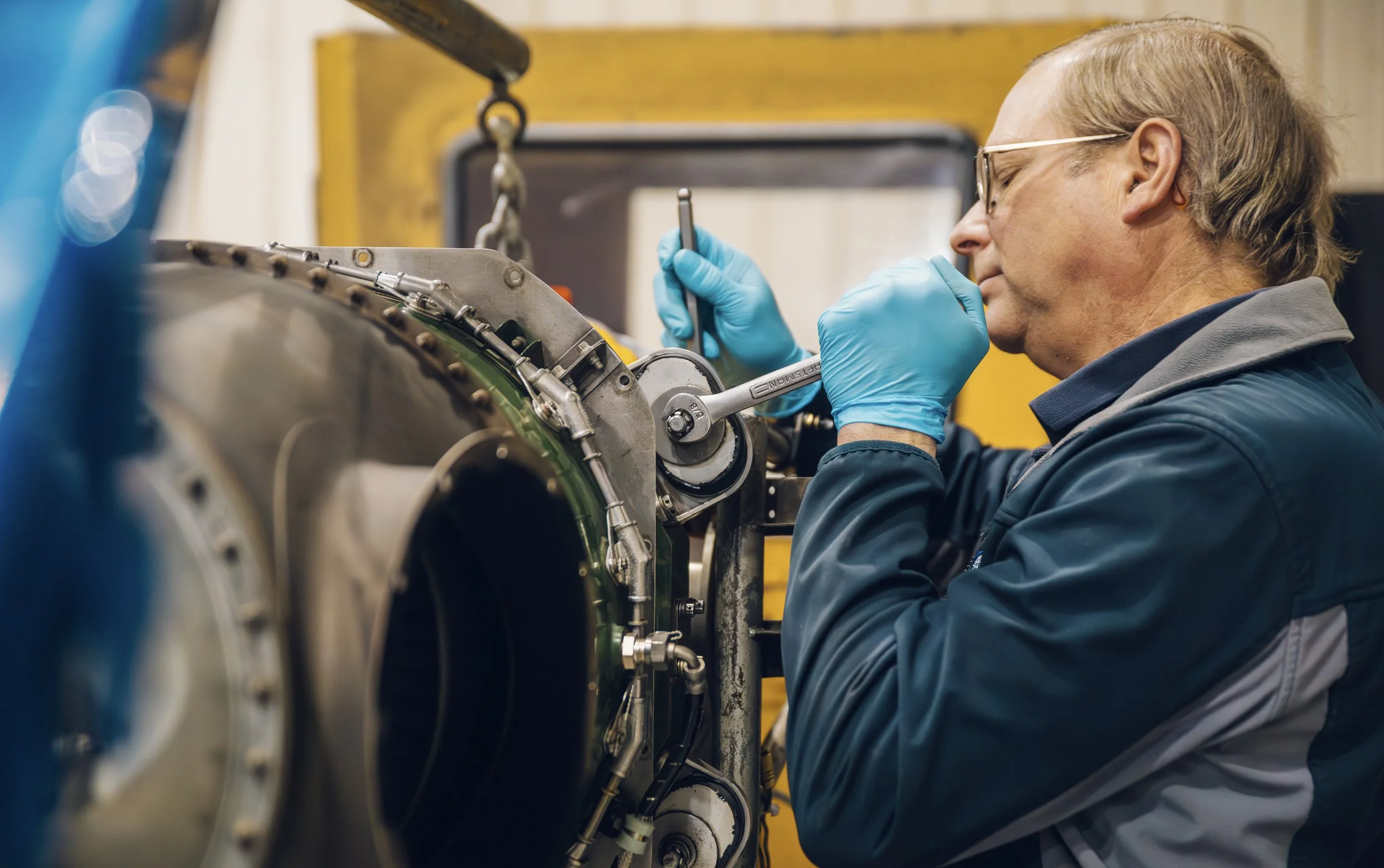
You get to know how everything works. Troubleshooting, structural repair, electrical, avionics, sheet metal, machine work — across types most mechanics spend a career hoping to touch. The structures people bend metal because they love bending metal. This is an artisan culture: you take the gifts you were given and you grow, every day, in your knowledge of how to properly repair anything on any aircraft we own.
And the work has weight. Your hands, combined with the hands of everyone else on your team, put an airplane on station — on time, every time. When that airplane is doing its mission somewhere difficult in the world, you know it is there because of what you did. That is not an abstraction. It is the meaning built into the work itself.
Others first
One thing is non-negotiable here. Not credentials. Not years in the trade. Not energy level.
This is not a value among values. It is the foundation beneath everything else. The formation model assumes it is already present in you and builds from there. A person who is genuinely others-first — who carries it with conviction, not performance — will find that Dynamic is built for them. A person who is not will find that the culture asks something it cannot install.
It tends to come naturally to the kind of mechanic who thrives here. If your satisfaction comes from the work being right rather than from being noticed for it, you are already oriented the way this place requires. The airplane on station matters more than the credit. The team getting it done matters more than who gets seen doing it.

You carry two roles at the same time
Every coworker at Dynamic carries two roles simultaneously: a generalist role and a specialist role. As a mechanic, the broad discipline is your generalist role — the work you do across the operation. Alongside it, you develop a specialist depth: structures, electrical, avionics, sheet metal, inspector. That specialist dimension is not a job title. It is a direction of formation that deepens over time and narrows as you grow.
The generalist role stays broad. The specialist dimension becomes increasingly precise. Together they produce something a manufacturing environment cannot: a mechanic who knows the whole aircraft and has mastered a part of it at a level few people anywhere can match. This is not incidental to how Dynamic works. It is how Dynamic works.
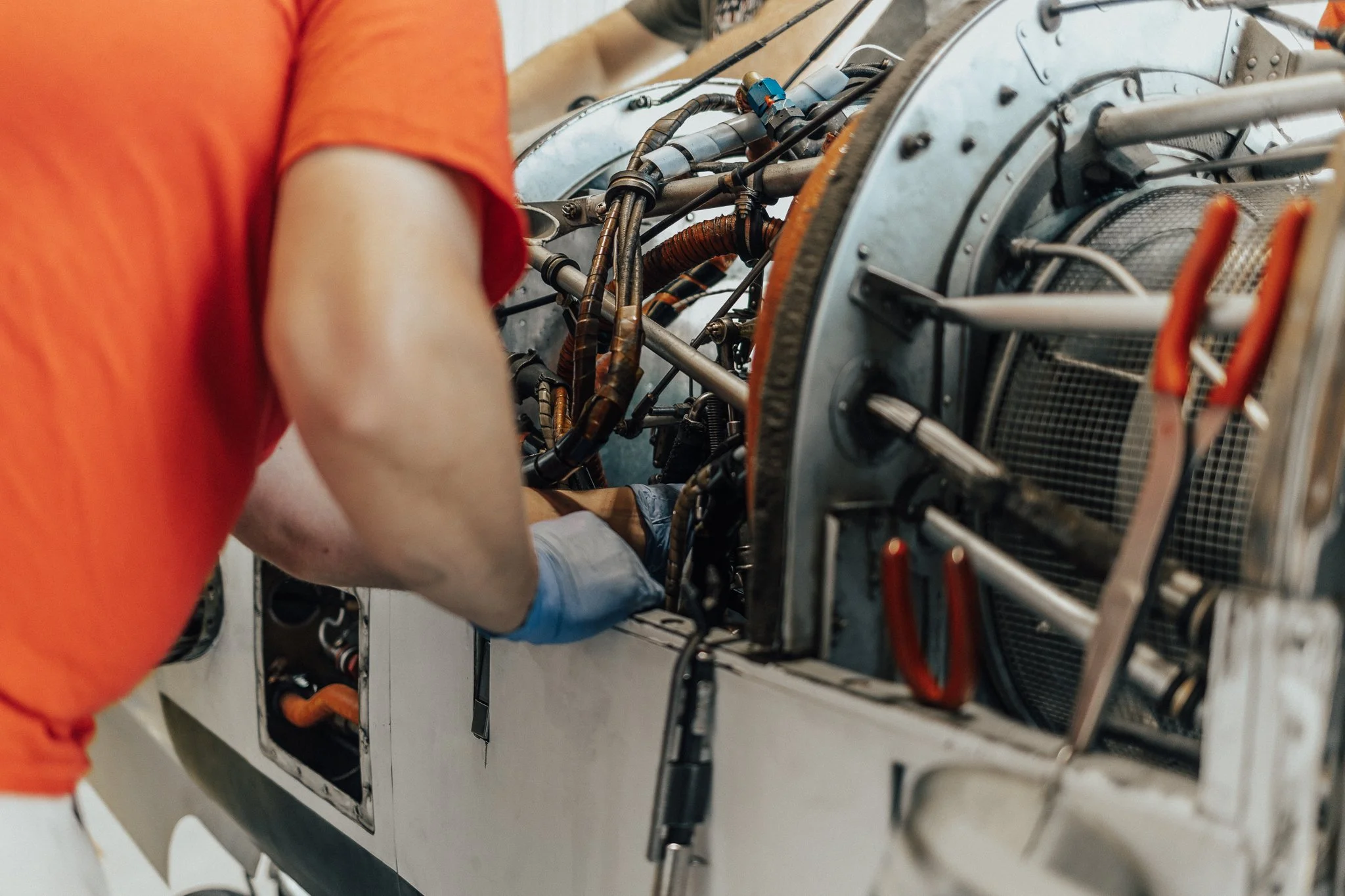
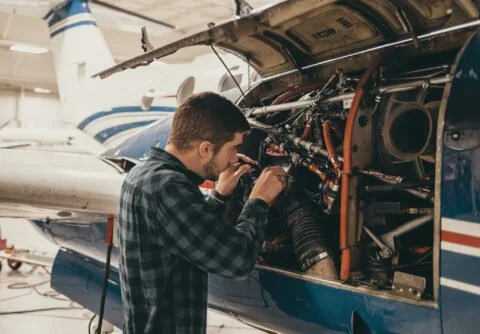
That model lives inside small, semi-autonomous, self-replicating teams of six to twelve people. Every team includes one to three apprentices. Formation is not a program that runs alongside the work — it is embedded in the composition of the team itself. The apprentice learns from the specialist. The specialist is sharpened by the teaching. The team replicates because replication is built into how it is assembled.
These are not teams that wait for direction. They carry real authority to execute. If you come as an apprentice, you are not peripheral to that team — you are a structural part of it, and the team was built expecting you. If you come with experience, part of what you are entrusted with is the one to three people who will learn from watching you work.
Dynamic owns the aircraft you will work on
There is a reason this place is a job shop and not a line, and it goes back to who built it. This family has been in aviation since 1936. Chris D. Stoltzfus started a business that year. In 1958 he formalized it as Chris D. Stoltzfus and Associates, bringing in his sons Karl and Ken. In 1967 Karl and Ken founded K&K Aircraft. In 1997 Karl and his son Michael cofounded Dynamic Aviation. The same posture, carried forward across every transition.
That posture is owner-operator. Dynamic owns the aircraft you will work on — not a customer's asset passing through to be billed and pushed out the door, but its own fleet, operated at the edge of what is possible, on missions that depend on every airplane performing when it matters. When you own and operate aircraft that way, you understand them from the inside out. Not because a standard requires it. Because the asset is yours, the responsibility is yours, and getting it right is the whole point.
Every dollar that has come into this enterprise has gone back into it - into the aircraft, the campus, the people, the capability. What you see when you walk through the hangar doors is what nearly ninety years of that reinvestment looks like. And nearly all of it is here, in one place, in the Shenandoah Valley. A mechanic can give a whole career to this work and go deeper every year without ever having to leave the valley to do it.
8
Hangars
500k+
Square Feet of Buildings
700
Acres
5
Continents Flown
The standard reaches the floor through people
The clearest way to understand what this place produces is to look at the people who received the standard this family built and passed it on. The person who carried it into the maintenance operation more than anyone was Virgil Gottfried — a genuine pilot mechanic who poured himself into the people around him, teaching them to work on airplanes with patience and an exacting standard. His question was never what is best for the flight side or the maintenance side. It was always what is best for the company and the assets we own.
Virgil Gottfried
The source
A genuine pilot mechanic. Too technical, too thorough, too committed to doing it right to optimize for speed. When his formal role ended, the relationships did not — people were still calling him years later, because what he gave was not positional.
Brad Holliday
The standard, held
Came from the mission aviation world around 1999. A standards bearer first and a mentor second — the closest thing the maintenance system has to Virgil today, holding the line on what right looks like across the whole operation.
Pete Parker
Deep in the craft
Went deep into the work. Nearly thirty years in, on the 737 program, still on the floor, still building.
Tim Ramey
Carrying responsibility
Out of the Air Force. Ran the King Air program, ran the Dash 8 team, and is back leading King Air maintenance — twenty-eight years of getting it done.
Marty Taylor
The 2 a.m. call
Out of the Navy. Thirty years of technical depth across the entire fleet, worked on Dynamic aircraft around the world, and now runs maintenance control — the operation the whole fleet calls when something breaks in a difficult place.

The people will know — not know about
The coworkers alongside whom you will do this work did not arrive through a job board. They came through communities already formed for the values that make this place function. They understand what it means to serve. They understand what it means to be accountable to a small team. They understand that the work matters beyond the paycheck.
That shared formation is not incidental to the experience. It is the experience. The teammate who works through a discrepancy at eleven at night is not doing it because it is in a job description. The mentor who invests in your formation is not fulfilling a program requirement. The culture holds because the people in it were shaped to hold it before they arrived.
The path is real — so is what it asks
The work is physical. The standards are high and consistently held. The specialist depth you develop will take years — not months — to reach. There is no shortcut through the laborer-to-artisan progression, and the people here who have walked it will not pretend otherwise. The pace here is the pace of genuine formation — slower than a promotion cycle and more permanent than a credential.
And the others-first culture is real. Marty Taylor has thirty years of technical depth and could leverage every bit of it for his own recognition. Instead he is the person the whole fleet calls at two in the morning when something breaks and someone needs help. That is not a job description. It is a disposition. It was already his when he arrived.
The mechanic who has always found more satisfaction in the work being right than in being known for doing it tends to walk onto this campus and feel something they did not expect to feel. Like they were always supposed to be here.
If this is you,
welcome home
Dynamic Aviation is not for everyone. It is for people who want to do real work. Who want to give themselves to something, not just show up for it. Who want to grow, not just perform. Who believe that flying and maintaining and serving are not separate things but expressions of a single purpose to which they were sent.